
What defines a true luxury perfume in 2026? The question is worth asking, as the high-end fragrance market has changed profoundly in recent years. Between historical major houses reinventing their classics, niche brands shaking up the codes, and increasingly sophisticated counterfeits, finding your way through has become an art in itself. This guide accompanies you step-by-step: understanding what makes a luxury perfume, choosing the ideal scent according to the occasion or season, spotting good deals without sacrificing authenticity, and discovering the trends redefining prestige perfumery in 2026.
Table of Contents
- What is a True Luxury Perfume in 2026? Definition and Criteria
- The Best Luxury Perfume Brands in 2026: Our Selection
- How to Choose Your Luxury Perfume According to Occasion and Season
- Luxury Perfume and Sustainability: What's Changing in 2026
- Where to Buy a Luxury Perfume at the Best Price in France?
- Luxury Perfume for Men or Women: Do We Still Need to Choose?
- Frequently Asked Questions about Luxury Perfume
- Conclusion: Your Next Luxury Perfume Awaits
What is a True Luxury Perfume in 2026? Definition and Criteria
A luxury perfume is not just about a prestigious name on a bottle. In 2026, the definition has expanded to include both historical houses and a new generation of independent creators. On one hand, pillars like Chanel, Dior, and Guerlain continue to embody French excellence, with decades of expertise and rigorously selected raw materials. On the other hand, brands like Byredo, Maison Manël, or Gissah offer audacious compositions, often inspired by travels or personal memories, attracting a clientele in search of originality.
Concentration is a primary objective criterion for evaluating a high-end fragrance. An Eau de Toilette contains between 5 and 15% of perfume concentrate, offering a light hold of three to four hours. An Eau de Parfum, with 15 to 20% concentrate, easily lasts six to eight hours on the skin. The Extrait or Elixir, rarer and more expensive, exceeds 20% concentration and can be felt all day, or even until the next day on clothing. This relationship between concentration and price partly explains the price differences within the same line.
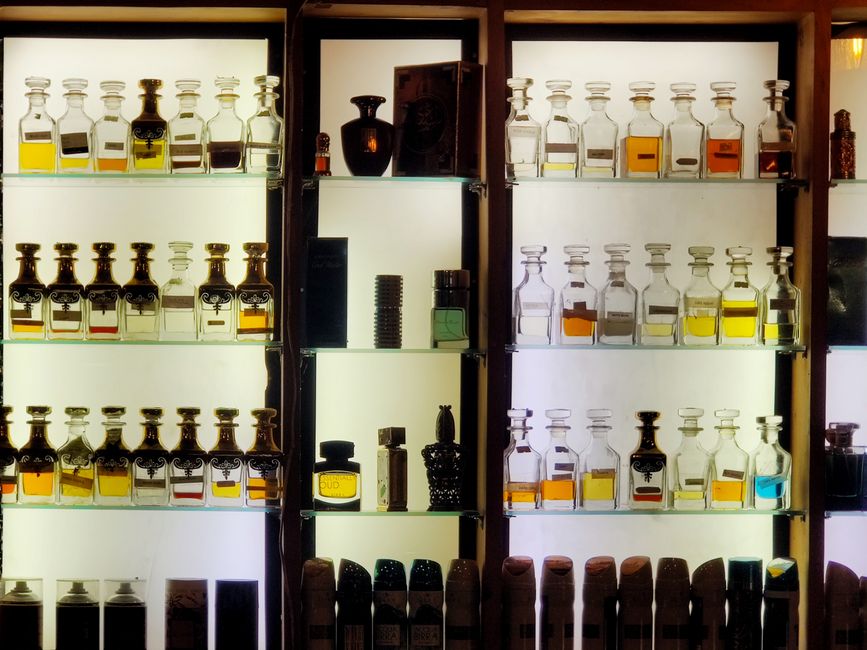
Raw materials make the difference between a luxury perfume and a cheap imitation. Major houses still use expensive natural ingredients: Grasse jasmine, Tuscan iris, Southeast Asian oud, Madagascan vanilla. These materials are sometimes replaced by synthetic molecules in mass-market perfumes to reduce costs. An authentic luxury perfume is also recognized by the complexity of its evolution on the skin: top, heart, and base notes unveil successively, whereas a copy remains linear and monotonous.
Authenticity remains the main concern for buyers in 2026. To check a bottle, start with the batch code engraved on the box and the bottle: it must be identical and correspond to a coherent production date. The plastic film surrounding the box must be perfectly taut, without bubbles or glue marks. The glass seams, the quality of the pump, and the weight of the cap are all clues. A luxury perfume bottle has a presence, a feel, a finish that no counterfeit can perfectly reproduce.
The Best Luxury Perfume Brands in 2026: Our Selection
Timeless Classics
Certain olfactory signatures transcend eras without aging. Chanel remains the absolute reference with Bleu, an aromatic woody fragrance that redefined contemporary masculine perfume, and N°5, the aldehydic floral that embodies feminine elegance since 1921. Coco Mademoiselle, more modern, attracts a generation looking for a fresh and sophisticated trail. These three pillars continue to dominate sales in France in 2026, proving that heritage still has a bright future.
Dior plays on a dual register with Sauvage, whose peppery and amber freshness is a hit with men of all ages, and J’adore, a luminous floral bouquet that remains one of the most gifted feminine perfumes. Miss Dior, regularly reinterpreted, asserts itself as the house's chypre floral, both romantic and assertive. Dior's strength lies in its ability to offer each bestseller in EDT, EDP, Parfum, and Elixir versions, thus covering all needs for longevity and intensity.

Guerlain, the doyen of French perfumery, deserves a special place. Shalimar, created in 1925, remains one of the most enchanting orientals ever composed, with its smoky vanilla and candied citrus notes. L’Homme Idéal, more recent, has established its almond-cherry-leather accord as a uniquely recognizable masculine signature. Buying a Guerlain means owning a fragment of French olfactory history, a luxury that never goes out of style.
New Niche Brands and Oriental Perfumes
The luxury perfume landscape has been enriched in 2026 by creators who reject the marketing compromises of large groups. Byredo, founded in Stockholm, offers refined and narrative compositions like Blanche, a musky floral inspired by the perception of the color white. Granado, a Brazilian house, draws on tropical botany for exotic scents. Maison Manël Paris, more confidential, works with fig, sandalwood, or vetiver accords with an artisanal approach that appeals to collectors.
Perfumes from Dubai and the Middle East are experiencing spectacular growth in France. Lattafa, Gissah, and Emarati offer amber, woody, and spicy fragrances with exceptional longevity. These brands use high concentrations and ingredients like oud, saffron, or Taif rose that correspond to an oriental tradition of generous and enveloping perfume. The success of these houses is also explained by an often unbeatable quality-price ratio: an extrait de parfum under 80 euros can compete with Western creations three times more expensive.
This growing popularity among French collectors is due to several factors. First, weariness with the overly formatted launches of major brands. Then, the search for distinctive scents that are not found on everyone in the subway. Finally, the appeal of generous formats and often spectacular bottles, which transform perfume into a decorative object as much as a beauty accessory.
How to Choose Your Luxury Perfume According to Occasion and Season
A luxury perfume is not worn in the same way for the office, an evening out, or a rainy Sunday at home. For daily professional wear, opt for fresh and discreet fragrances: citrus, aromatic, or light floral. A Chanel Bleu EDT, a Hermès Eau de Citron Noir, or a Maison Francis Kurkdjian Aqua Universalis emit a pleasant presence without overwhelming the open-plan office. The golden rule: your perfume should be discovered, not imposed.
Evenings and special events call for more assertive compositions. Leather, oud, spice, or tobacco notes fully come alive indoors, in the warmth of a dinner or a dance floor. A Kurkdjian Oud Satin Mood, a Tom Ford Tuscan Leather, or a Guerlain Shalimar deploy a magnetic trail that leaves a lasting impression. These strong-personality luxury perfumes are worn in measured touches: one spray behind each ear and one on the neck are sufficient.
Seasonality plays a decisive role. Summer favors citrus, light white florals, and aquatic notes that flourish in the heat without becoming cloying. Winter, on the contrary, calls for woody, oriental, and gourmand notes whose richness is revealed in the cold. The same luxury perfume can also behave differently depending on the ambient temperature and humidity, which explains why many collectors rotate their olfactory wardrobe throughout the months.
An emerging trend deserves attention: "sleep perfumes" or "home perfumes." Popularized by passionate communities on social media, this practice consists of wearing soft, comforting, and intimate fragrances in private settings, without the intention of projecting a social trail. Scents like Byredo Blanche, Frédéric Malle L’Eau d’Hiver, or scented textile mists create a personal olfactory bubble, a luxury one offers to oneself. This approach transforms luxury perfume into an emotional experience rather than a simple accessory of seduction.
Luxury Perfume and Sustainability: What's Changing in 2026
Luxury perfumery is not immune to the ecological revolution. In 2026, French consumers are increasingly demanding transparency regarding the origin of raw materials and production conditions. Cruelty-free and vegan brands are gaining ground: Byredo, Le Labo, and part of Chanel's collections now clearly display their commitment against animal testing. Veganism in perfumery implies the absence of animal-derived ingredients such as natural musk, civet, or ambergris, replaced by synthetic molecules or plant-based alternatives.
Ethical sourcing is becoming a selling point in itself. Grasse flowers, Madagascan vanilla, or New Caledonian sandalwood are cultivated through sustainable partnerships that guarantee decent incomes for local producers. Guerlain, for example, has established exclusive agreements with vetiver producers in Haiti and iris growers in Tuscany, ensuring both the quality of harvests and the preservation of agricultural savoir-faire. These initiatives meet strong expectations in the French market, where responsible luxury is no longer an option but a norm.
Refillable bottles represent the other major project in the sector. Chanel led the way with its perfume fountains in boutiques, allowing customers to refill their Exclusifs bottles. Guerlain offers refills for its entire Aqua Allegoria range, significantly reducing discarded glass and plastic. Dior, Mugler, and Hermès are following suit. When purchasing, check for certifications like Slow Cosmétique or Leaping Bunny, which attest to a verified commitment rather than just a marketing display.
Where to Buy a Luxury Perfume at the Best Price in France?
The price of a luxury perfume can vary significantly depending on the purchase channel. Discount websites like parfum-luxury.com offer reductions ranging from 32 to 53% on brands like Chanel, Dior, Paco Rabanne, or Dolce & Gabbana. These platforms sell off end-of-series, overstocks, or batches with slightly modified packaging. The risk of counterfeiting exists, but it is limited if you check the seller's reputation, recent customer reviews, and the presence of a reachable customer service in France.
Online private sales and promo codes are another interesting avenue. Retailers like Beauté Privée, Showroomprivé, or Veepee regularly organize ephemeral luxury perfume sales with discounts of 30 to 50%. The trick is to subscribe to the newsletters of sites that interest you and monitor the start dates of sales: the best references often sell out in the first few hours. However, be wary of overly tempting offers on social media, which frequently hide imitations.
Resale platforms between individuals like Vinted or eBay allow you to find bottles at half price but require increased vigilance. Always ask for a photo of the batch code, the bottom of the bottle, and the open box. A seller who refuses to provide these elements or offers an abnormally low price for a supposedly new bottle should raise your suspicions. Second-hand luxury perfumes that have already been started can be a good deal if the seller specifies the opening date and storage conditions.
Physical boutiques and department store counters remain the benchmark for a confident purchase. Galeries Lafayette, Le Bon Marché, or Printemps employ trained advisors who guide you in your choice and help you discover brands you might not have considered. The price there is generally the recommended retail price, but the service often includes free samples, careful packaging, and the guarantee of an authentic product. For a first purchase or a gift, this channel remains the safest.
Luxury Perfume for Men or Women: Do We Still Need to Choose?
The distinction between men's and women's perfumes is fading in 2026. Major houses and niche brands increasingly offer explicitly unisex fragrances, or simply presented without gender labels. This evolution reflects a commercial reality: consumers, especially those under 35, choose their luxury perfume based on their olfactory sensitivity rather than marketing-imposed categories.
Some creations work remarkably well on all genders. Le Labo's Santal 33, with its creamy sandalwood and leather notes, has been worn interchangeably by men and women since its release. Kurkdjian's Baccarat Rouge 540, an enchanting blend of saffron, cedar, and amber, transcends classifications. Even classics like Dior's Eau Sauvage or Guerlain's Shalimar now find an audience beyond their historical target.
Brands are adapting their communication to this new reality. Advertising visuals focus less on gendered archetypes and more on atmospheres, textures, and emotions. Product descriptions on e-commerce sites offer detailed olfactory pyramids rather than rigid assignments. This more inclusive approach corresponds to a vision of luxury perfume as personal expression, rather than conformity to a predefined social role.
Frequently Asked Questions about Luxury Perfume
What is the difference between a luxury perfume and a mass-market perfume? The answer lies in three words: ingredients, concentration, creation. A luxury perfume uses noble, often natural, ingredients in high concentrations. It is composed by a renowned perfumer who signs an original work, whereas mass-market distribution produces standardized juices based on inexpensive molecules, designed to appeal to the widest audience without artistic risk-taking.
How do I know if my luxury perfume is authentic? Check the batch code on the bottle and box, examine the quality of the glass and cap, and smell the evolution of the perfume on your skin. An authentic perfume reveals its notes in several stages; a counterfeit often smells of alcohol initially and then remains static. If in doubt, contact an official brand boutique for verification.
How long does a bottle of luxury perfume last once opened? Under optimal storage conditions (away from light, heat, and temperature variations), a luxury perfume can last between three and five years after opening. Citrus top notes are the first to alter. A perfume that has turned will emit a sour or metallic odor, and its color may darken abnormally.
Are luxury perfumes really worth their price? If you are looking for a distinctive olfactory signature, long-lasting wear, and a complete sensory experience, the answer is yes. The price of a luxury perfume reflects the cost of raw materials, the perfumer's work, packaging, and selective distribution. That said, the niche and oriental perfume market proves that excellent high-end fragrances exist at more accessible prices, between 50 and 100 euros.
Can you find a good luxury perfume for less than 50 euros? It's possible through discounters, private sales, or emerging brands like Lattafa. Some specialized sites offer travel sizes or discovery sets that allow access to prestigious brands without breaking the bank. The important thing is to verify the authenticity of the product, regardless of the price displayed.
Conclusion: Your Next Luxury Perfume Awaits
Luxury fragrance in 2026 is a vast and exciting territory, where timeless classics coexist with the boldest creations. Authenticity remains the essential compass for navigating between good deals and misleading imitations. The choice of a fragrance depends as much on your personality as on occasions and seasons, not to mention this new freedom of wearing a perfume simply for oneself, at home. Underlying trends, from ethical sourcing to refillable bottles, as well as the rise of oriental perfumes, paint a future where luxury rhymes with conscience and discovery.
Take the time to explore, to smell, to compare. Go to a store to test these brands on your skin, because a luxury perfume is never judged on a paper blotter. It is lived, it is worn, it becomes a part of your identity. The exceptional scent that suits you is waiting somewhere, ready to write the next chapter of your olfactory story with you.