
Handmade artisan candles have taken French interiors by storm, far beyond a mere decor trend. They embody a quest for authenticity, a return to noble materials, and a desire to slow down in a daily life saturated with standardized objects. Yet, between mentions like "vegetable wax," "handmade," or "Grasse fragrance," it's not always easy to distinguish a genuine creation from a marketing claim. This guide provides you with all the keys to understanding what makes a handmade candle valuable, how to choose one according to your desires – whether for a personalized gift, sustainable decoration, or a creative workshop – and even how to make your own. The content is tailored for the French market, featuring local brands, prices in euros, and benchmarks compliant with European regulations.
Table of Contents
- Why choose an artisanal candle over an industrial one?
- Different types of wax for handmade candles
- How to choose your artisanal candle based on its use
- The most popular scents in France in 2026
- Making your own artisanal candles – step-by-step guide
- How much do handmade candles cost in France?
- Where to buy artisanal candles in France (and online)?
- Frequently asked questions about artisanal candles
- Conclusion – adopting artisanal candles, a gesture for oneself and the planet
Why choose an artisanal candle over an industrial one?
The difference between an artisanal candle and an industrial model begins with its composition. Handmade candles use vegetable waxes such as rapeseed, soy, or coconut, without paraffin – a petroleum derivative still massively present in mass-produced candles. This absence of paraffin changes everything: the combustion is cleaner, without the release of black soot or irritating volatile compounds. A rapeseed wax candle burns, on average, 30 to 50% longer than a standard paraffin candle of the same weight.
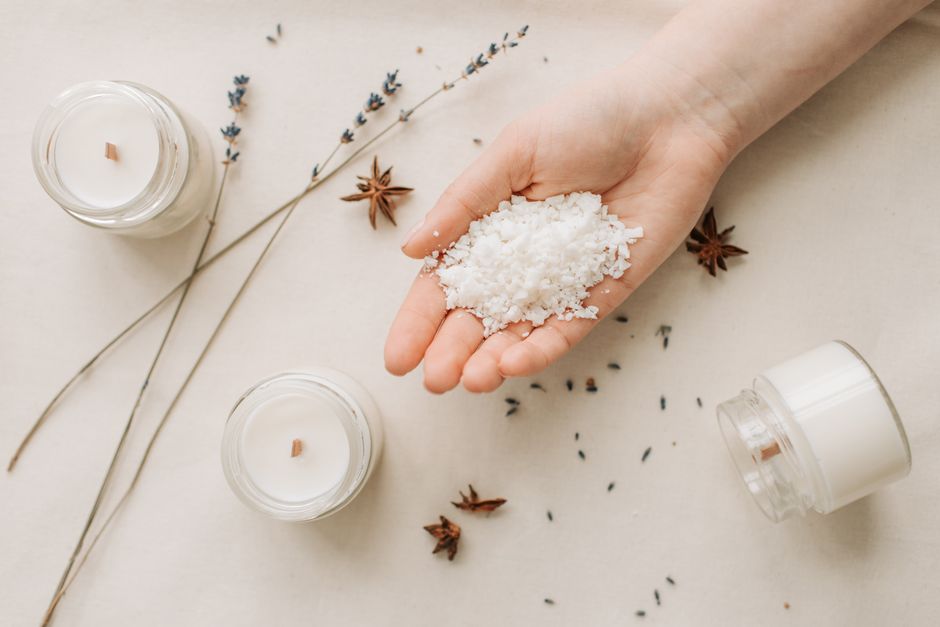
Beyond performance, each piece tells a story. Hand-poured, often into recycled or upcycled containers – like those terracotta yogurt pots repurposed by some creators on Etsy – the artisanal candle is unique by nature. Workshops like La Fabrique des Lutins or Atelier Louis root their production in specific territories: Grasse for fragrances, Alsace for manufacturing. Buying a handmade candle means supporting a local economy and reducing the carbon footprint associated with transporting goods produced halfway across the world.
Different types of wax for handmade candles
The choice of wax determines the quality of combustion, scent diffusion, and environmental impact of your candle. Here are the four main waxes used by French artisans.
Rapeseed wax – the French favorite
Rapeseed is an abundant local resource in France, giving it a naturally low carbon footprint. This wax offers excellent fragrance retention and a slow, even burn. Its natural whiteness allows it to be used without dyes, an asset for those who prefer a minimalist aesthetic. Atelier Louis and the Dutch brand Canndle have made it their signature, proving its growing popularity in the European market.
Soy wax – the vegetable reference
Very popular for scented candles, soy wax excels in rendering gourmet notes: salted caramel, lemon meringue, apple cinnamon. Its smooth texture and ease of use also make it a favorite for beginners in home manufacturing. A word of caution, however: soy is often imported from the United States or Asia. For an eco-responsible purchase, check the origin of the wax and favor short supply chains when possible.
Beeswax – the natural and purifying choice
Beeswax is the historical choice, ideal for sensitive or allergic individuals. It naturally emits negative ions that help purify the ambient air. Its natural honey and propolis scent is warm, but it can mask added fragrances: it's better to appreciate it for what it is, without trying to over-perfume it. Its price is higher than vegetable waxes, but its very slow burn offsets the investment.
Coconut wax – high-end softness
Creamy and smooth, coconut wax adheres perfectly to the walls of glass containers, preventing unsightly detachment. It is rarely used pure: artisans mix it with rapeseed or soy to balance its very soft texture with better heat resistance. Still confidential in France, it is reserved for premium creators who focus on a high-end tactile and visual experience.
How to choose your artisanal candle based on its use
An artisanal candle is not chosen at random. The use you intend for it guides the format, container, and type of scent.
For a gift, customizable candles are unbeatable. French creators on Etsy excel in this niche: wax seashells for a holiday souvenir, spherical roses for Valentine's Day, small tulle bags with the recipient's name tag. Attention to detail makes all the difference.
For a wedding or event, bulk lots are the practical and economical solution. La Fabrique des Lutins offers packs of 24 or 48 pieces, while Etsy sellers specialize in guest candles with screw caps, perfect for slipping into a bag or sending by mail.
For interior decoration, opt for reusable containers – enameled ceramic, thick tinted glass – and soft scents like lavender, orange blossom, or sandalwood, which subtly enhance the space without overpowering it.
For an original experience in Paris, book a workshop at Lili Candle Paris. You'll create your own candle with dried flowers or in a gourmet trompe-l'œil, an activity that combines artisanal know-how and creative escape.
For daily use, a 150g rapeseed wax candle, sold between €9.90 and €11.90, offers excellent value for money. Its thirty-hour burn time accompanies several weeks of quiet evenings.
The most popular scents in France in 2026
The olfactory landscape of artisanal candles evolves, but certain fragrance families remain firmly rooted in French preferences. Timeless classics – vanilla, lavender, cherry blossom – continue to dominate sales, driven by their ability to create a reassuring and familiar atmosphere.
Gourmet trends are gaining ground, directly inspired by French pastry: Dirty Butter Caramel, Lemon Meringue, apple cinnamon. These fragrances play on nostalgia and the appeal of sweet and comforting notes.
Grasse floral notes – jasmine, centifolia rose, tuberose – remain a guarantee of quality and refinement, particularly sought after for high-end gifts. In autumn and for year-end holidays, woody and spicy scents like pine, cedarwood, and cinnamon take over.
A tip: choose phthalate-free and endocrine disruptor-free fragrances. Serious French brands clearly state this on the label, a reflex to adopt to combine olfactory pleasure and safety.
Making your own artisanal candles – step-by-step guide
Embarking on handmade candle making is more accessible than it seems. With a little equipment and method, you can create personalized candles for your home or to give as gifts.
Essential equipment
To start, choose an easy-to-work vegetable wax: rapeseed or soy are perfect. Plan for untreated cotton wicks, a heat-resistant container (thick glass, ceramic), a kitchen thermometer, a double boiler, a wick clip, and hot glue or double-sided adhesive to secure the wick to the bottom of the container.
Key steps
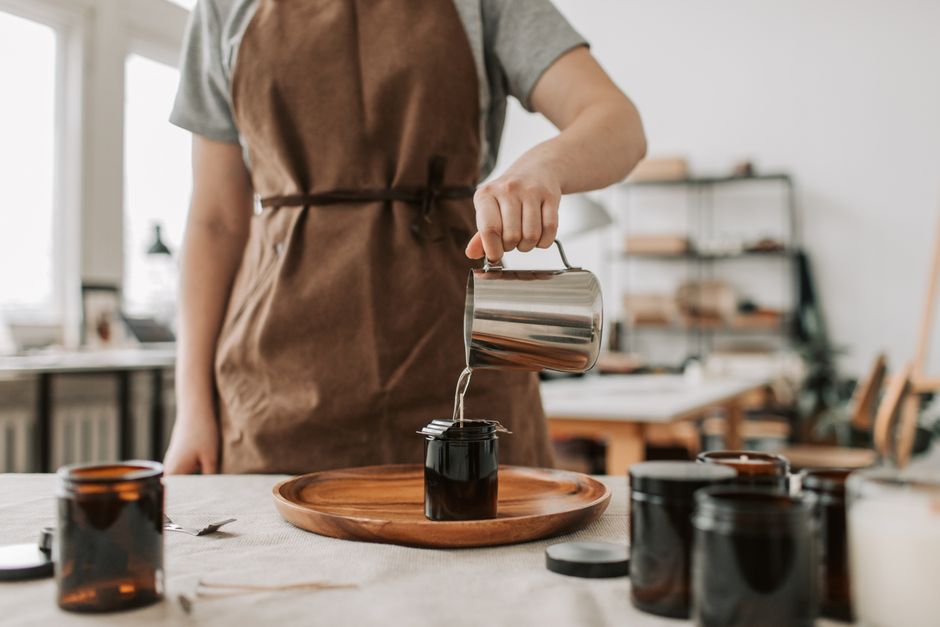
First, secure the wick to the bottom of the container with a dab of glue, making sure it is well-centered. Melt the wax in a double boiler until it reaches 75–80 °C; never exceed 90 °C, as this can degrade the wax. Off the heat, add the fragrance – count 6 to 10% of the wax weight – and mix gently for one to two minutes for good incorporation. Pour the wax into the container, re-center the wick if necessary, then let it cool at room temperature for 24 hours without moving the candle. Before the first use, trim the wick to 0.5 cm to avoid too high a flame and uneven burning. To learn more about combustion techniques, especially how to avoid tunneling, you can consult the advice on the first burn of a candle.
Safety and regulations (EU)
If you are making for personal use, common sense rules suffice: never leave a burning candle unattended, keep out of reach of children and pets, keep away from drafts. If you plan to sell your creations, European regulations apply. Artisanal candles must comply with standard EN 15494, which governs safety labeling. The mentions "Do not leave unattended" and "Keep out of reach of children" are mandatory. The fragrances used must be declared in accordance with the CLP regulation, and it is recommended to keep a technical file for each product placed on the market.
How much do handmade candles cost in France?
The price of an artisanal candle reflects the quality of raw materials, manufacturing time, and the container. For a small size of 100 to 150g, prices range from €9.90 to €18.00 depending on the wax and brand. Medium sizes, around 200 to 300g, are priced between €18.00 and €35.00 for premium quality with Grasse fragrances.
Bulk lots for events reduce the unit cost: small guest candles can be found from €1.59 each, while a pack of 48 scented melts can reach €285.60. For a DIY workshop in Paris, expect to pay between €45 and €75 per person for a one-and-a-half to two-hour session, materials and guidance included. Price remains a good indicator of seriousness: a candle sold for less than €5 is rarely made with quality vegetable waxes and additive-free fragrances.
Where to buy artisanal candles in France (and online)?
The French market abounds with addresses to find handmade candles, whether you're looking for a unique piece or a lot for an event. Atelier Louis offers rapeseed wax candles scented in Grasse, made in France, with excellent value for money for direct purchase. Etsy France brings together more than 1,000 creators, from small budgets to custom wedding orders, with an unparalleled diversity of styles. La Fabrique des Lutins stands out for its French craftsmanship and its lots designed for professionals and individuals alike. Lili Candle Paris combines in-person workshops and an online store, a perfect formula for offering an experience. Finally, Canndle.nl, an eco-responsible Dutch brand, delivers rapeseed wax candles to France in plastic-free packaging. If you're looking for corporate gift ideas, artisanal candles offer a memorable alternative to standard goodies.
Frequently asked questions about artisanal candles
How long does an artisanal candle burn? A 150g rapeseed wax candle lasts approximately 30 to 40 hours, depending on burning conditions and wick size. Are artisanal candles safe for pets? Yes, if they use vegetable waxes and natural fragrances without toxic essential oils. Be careful, however, to avoid eucalyptus and cinnamon in the presence of cats. Can I reuse the jar after the candle is finished? Absolutely. Clean the container with hot soapy water to remove wax residue, then turn it into a drinking glass, pencil holder, or small vase. What is the difference between an artisanal candle and an industrial candle? The composition – natural waxes versus paraffin –, the manufacturing process – hand-poured versus mechanical molding – and the uniqueness of the finished product.
Conclusion – adopting artisanal candles, a gesture for oneself and the planet
Choosing an artisanal candle means opting for healthier combustion, a meaningful object, and direct support for French artisans. Whether you fall for a rapeseed wax creation, book a workshop in Paris, or embark on home manufacturing, every action counts. In 2026, the French market for handmade candles continues to grow, driven by a demand for transparency and sustainability. Explore the brands and creators mentioned, share your discoveries on social networks, and make every flame a small step towards more authenticity.